


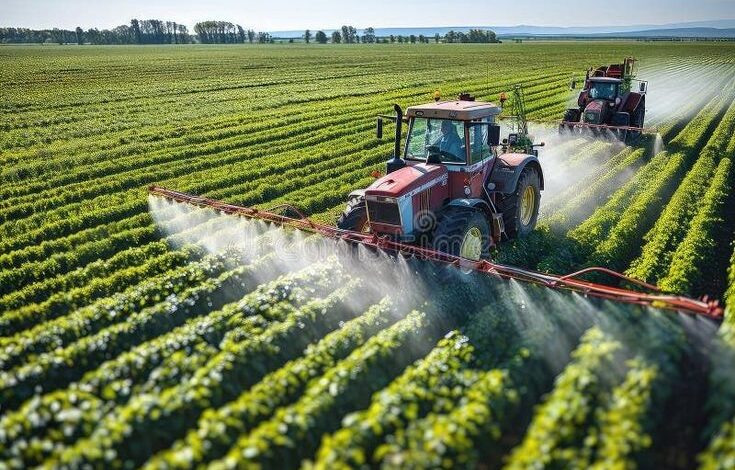
India stands at a remarkable inflection point in its agricultural history. On one side, over 140 million farm households continue to wrestle with the timeless challenges of variable monsoon, soil degradation, rising input costs, and volatile commodity prices. On the other, an unprecedented wave of agri innovation in India is placing tools once reserved for research stations directly into the palms of farmers.
The 2026 kharif and rabi sowing seasons are shaping up to be the most technologically influenced in India’s farming history. Satellite-guided soil mapping, AI-powered crop advisory, gene-edited seed varieties from leading seed companies in India, and IoT-connected irrigation systems are no longer pilot programmes — they are entering mainstream adoption across Haryana, Punjab, Maharashtra, MP, and beyond.
At Shriram Farm Solutions, we have spent over five decades translating scientific advances into field-ready solutions for Indian farmers. This guide brings together the most important developments in new technology in agriculture in India that every farmer and agronomist should understand before the 2026 season begins — and explains practically how to use them.
1. Why 2026 Is a Pivotal Year for Agri Technology in India
The Policy Tailwind
Several converging government initiatives are accelerating the adoption of new technology in agriculture in India in 2026:
• Digital Agriculture Mission (DAM): The Union Budget 2024–25 allocated ₹1,250 crore for a Comprehensive Digital Agriculture Mission, creating a Farmer Registry, Crop Sown Registry, and AgriStack — a digital public infrastructure layer that enables precision advisory at individual farm-plot level.
• PM-KISAN integration with AgriStack: Linking direct-benefit transfers to digital farm IDs creates a data infrastructure that allows agri-tech companies and seed companies in India to offer hyper-personalised recommendations for the first time.
• National Mission on Natural Farming (NMNF): ₹2,481 crore allocated to transition 1 crore farmers to natural farming over two years — creating demand for biological seed treatments, biofertilisers, and precision soil health management technologies.
• Soil Health Card 2.0: Updated digital soil health cards with QR-code accessibility are now linked to crop-specific fertiliser and seed recommendations, directly benefiting farmers during sowing decisions.
2. Seed Technology: The Foundation of Smart Sowing
Before any sensor, drone, or AI model can add value, the seed in the ground determines the ceiling of what is possible. The most consequential new technology in agriculture in India in 2026 begins at the seed level — and the gap between advanced and conventional seed technology is wider than it has ever been.
Shriram Farm Solutions’ Seed Development Philosophy
At Shriram, seed science is not a single technology — it is a continuous system. Our breeding programmes integrate:
• Field trials across 300+ locations in India, covering every major agroclimatic zone
• Proprietary disease nurseries for screening resistance to rust, blast, wilt, and other region-specific threats
• Advanced seed treatment protocols combining biological PGPR inoculants with precision chemistry for uniform germination
• Climate-adaptive trait selection — specifically targeting performance under heat stress, irregular rainfall, and variable soil types common across Indian farming landscapes
Our flagship Shriram Super 5 (SR-05) — India’s favourite Super Wheat — is the product of this philosophy: a variety engineered for high yield stability across North India’s variable climates, with built-in tolerance to late-season heat stress during grain filling.
Browse the full range of Shriram’s science-backed seed portfolio at Find by Crop or explore by input type at Find by Category.
3. Precision Farming: The Satellite-to-Soil Toolkit
Precision agriculture — the use of spatial data, sensors, and analytics to manage crop inputs with field-level specificity — is the most visible face of new technology in agriculture in India in 2026. It is also, finally, becoming economically accessible to smallholder farmers thanks to mobile-first delivery and shared infrastructure models.
Soil Health Mapping with Remote Sensing
Traditional soil sampling covers one composite sample per 2–5 acres at best. Satellite-based spectral analysis combined with IoT soil sensors now enables soil nutrient mapping at 10-metre resolution. Key players and platforms operational in India include IARI’s FASAL programme, ISRO’s GeoKisan, and multiple private platforms.
For farmers: this means sowing-season fertiliser plans can be tailored to actual soil variability within a single field — ending the practice of blanket nutrient application that wastes inputs and damages soil health.
Drone Technology for Sowing Season
Agricultural drones crossed 10,000 registered units in India in 2025. In the 2026 season, drones are being used for:
• Pre-sowing soil scanning: multispectral imaging to identify compaction zones, drainage problems, and nutrient hotspots before seeds go in the ground
• Direct seeding: drone-based seed broadcasting for paddy, mustard, and certain pulses — reducing labour costs by 40–60% in some operations
• Variable rate input application: GPS-guided spraying that adjusts pesticide and fertiliser dosage based on real-time crop canopy data
• Crop stand assessment: post-germination NDVI mapping to identify poor germination patches and trigger corrective action within days of emergence
4. Agri Innovation in India: Key Developments by Crop Category
Wheat
• Heat-tolerant varieties with grain-filling period optimised for March temperature profiles (critical for North India)
• GPS-guided seed drill calibration ensuring 200–220 seeds/m² for optimal canopy architecture
• Nano-urea foliar application (IFFCO’s Nano Urea Liquid) reducing nitrogen requirement by 25–50% with comparable yield outcomes in verified trials
• CRISPR-edited stripe rust-resistant lines expected in regulatory pipeline by 2026–27
Rice / Paddy
• Direct Seeded Rice (DSR) technology supported by drone seeding platforms, reducing water use by 30% vs transplanting
• System of Rice Intensification (SRI) supported by precision soil moisture monitoring
• Aerobic rice varieties for dryland paddy cultivation in water-stressed regions of Maharashtra and Karnataka
• AI-based tiller count and canopy architecture monitoring for nitrogen management decisions
Maize
• Single-cross hybrids with staygreen trait performing 18–22% above older double-cross hybrids under water stress
• DTMA (Drought-Tolerant Maize for Africa and Asia) germplasm adapted for Indian conditions now widely available through leading seed companies in India
• Hermetic bag storage technology reducing post-harvest losses from 15–20% to under 3%
Oilseeds (Mustard, Groundnut, Soybean)
• Herbicide-tolerant mustard varieties (HT Mustard DMH-11) — approved by GEAC, offering the first commercial gene-edited oilseed crop in India
• High-oleic groundnut varieties for premium oil market segments
• Soybean varieties with natural whitefly and yellow mosaic virus resistance emerging from breeding programmes
Vegetables and Horticulture
• Protected cultivation (polyhouse/net house) with climate control sensors and automated fertigation delivering 3–5× yield vs open-field cultivation
• Grafted seedlings for disease-resistant tomato, brinjal, and capsicum production
• Digital marketplaces (eNAM, AgriBazaar, Ninjacart) linking farm gate directly to urban mandis, improving price realisation
5. The Evolving Landscape of Seed Companies in India
The seed sector is the nucleus of agricultural innovation. India’s seed market — valued at approximately ₹40,000 crore and growing at 12–14% annually — is undergoing rapid structural change that directly affects farmer access to new technology.
Shriram Farm Solutions: A Trusted Name Among Seed Companies in India
Shriram Farm Solutions’ seed division exemplifies what a research-driven Indian seed company can achieve. Built on the scientific foundation of DCM Shriram’s 50+ years in agri-inputs, our seed programmes span wheat, hybrid maize, hybrid vegetables, and field crops — each backed by proprietary breeding, multi-location trials, and comprehensive crop-specific agronomy.
Our commitment is captured in the Shriram Promise: better science, better harvest — not as a marketing statement, but as the operational standard applied to every product that leaves our breeding programme.
6. Shriram Farm Solutions — Innovation at Every Sowing
For over 50 years, Shriram Farm Solutions has embodied a single conviction: that Indian farmers deserve access to the best science available — packaged into practical, affordable, accessible products that work in Indian soil under Indian skies.
As new technology in agriculture in India accelerates, Shriram’s role evolves alongside it. We bridge the gap between laboratory breakthrough and field reality — ensuring that every advance in seed science, precision nutrition, or crop protection translates into a genuine yield advantage and income improvement for the Indian farmer.
• 50+ years of R&D-backed product development
• Proprietary breeding programmes spanning wheat, maize, vegetables, and field crops
• 300+ multi-location trial sites across India’s diverse agroclimatic zones
• Comprehensive Crop Advisory platform — from soil to harvest
• 3,000+ dealer touchpoints ensuring last-mile product access
• Farmer-to-Agri-preneur philosophy — empowering farmers as informed business operators
Explore our innovation story at R&D, learn about our Our Legacy, or discover how Shriram’s social programmes are transforming rural communities at Social Commitment.
Frequently Asked Questions
1. What are the latest technologies being used in agriculture in India?
New technology in agriculture in India includes precision farming tools, satellite-based soil mapping, agricultural drones, AI-powered crop advisory platforms, IoT irrigation systems, and advanced seed genetics developed by leading seed companies.
2. How will agri technology impact farming in the 2026 season?
Agri technology in 2026 will help farmers increase crop yields, reduce input costs, improve soil health, and make better sowing decisions through data-driven tools such as remote sensing, digital soil health cards, and AI-based crop recommendations.
3. What role do seeds play in modern agricultural technology?
Seeds remain the foundation of agricultural productivity. High-quality seeds developed through advanced breeding programs can offer better disease resistance, climate tolerance, and higher yield stability, making them essential for successful modern farming.
4. How are drones used in agriculture in India?
Agricultural drones are used for crop monitoring, soil analysis, pesticide spraying, fertiliser application, and direct seeding. They help farmers manage fields more efficiently while reducing labor costs and improving precision.